
The group chat is forty messages deep and the only thing anyone has settled is the date. That’s where most friendsgiving ideas start: a table full of people who each said yes to a dish and nobody who said yes to deciding. The potluck splits the cooking across eight kitchens. It leaves the deciding in one place, and that place is usually the host’s phone.
A Better Meal spends its time on the dinners around the party, where one tired person decides everything alone, and the two problems turn out to be the same one. This piece covers the friendsgiving ideas that keep a potluck table from repeating itself, then the part nobody puts on the invitation: the week the party lands in.
Friendsgiving ideas start with who decides what
Hosts describe the work as forty small tasks, none of them hard. That’s the trouble. Forty small decisions cost more than four big ones. Turkey or ham? Who owns the second folding table? Is the oven free at 3:30, or already holding somebody’s sweet potatoes? Each question is easy. Together they arrive in the same week as work, school pickups and the regular dinners nobody planned.
Decision fatigue is what that week does to a person. By Wednesday the host isn’t weighing stuffing recipes, they’re choosing whatever ends the question fastest, which is how a table gets three pasta salads and one lonely bag of rolls.
Somebody’s cousin “might bring something.” Somebody else is “thinking about a dessert.” Nobody’s wrong, and nothing is settled.
Friendsgiving potluck ideas that keep the table from repeating itself
Tables that avoid the pasta-salad pileup usually share one loose frame: a few categories, said out loud early. The short version:
- A main with an owner. One person takes the bird, the ham or the pan of lasagna, so the table has a center before anyone chooses a side.
- Sides grouped by kind. Something roasted, something creamy, something green, something crunchy. Four categories cover most tables.
- A dish that survives a car ride. Half the food crosses town on a back seat, which favors baked dishes, dips and anything that’s fine at room temperature. Travel-friendly mac and cheese bars are built for exactly that trip.
- Bread and dessert claimed early. They’re the first things to vanish from a group chat.
- One drink table. Eight bottles fighting for counter space is a worse deal than a single spot, and a holiday mocktail gives the guests who aren’t drinking something that isn’t a can of seltzer.
Five ideas, and none of them need a plan. They need somebody to say a category out loud.
Here’s the honest part. A list of friendsgiving ideas is also more options, at the moment the host already has plenty. A longer one wouldn’t help. The ideas settle one table. They don’t touch the deciding that got everyone there.
Friendsgiving food ideas for one oven and eight dishes
Most friendsgiving ideas get picked for taste and sorted by logistics around noon on the day. Reverse that order and the afternoon calms down. Start with the oven: one oven, one temperature, one rack that’s already full. Eight dishes that all want 400 degrees at 3:30 make a dinner that starts at 6:15. Mixed heat fixes it: something cold, something at room temperature, a slow cooker of something warm, a pot on the stove, and a single dish that really needs the oven. The crockpot dinner ideas show how far a lid and a low setting go.
Potluck trouble comes from the sitting more than the cooking. The USDA’s potluck guidance says to keep hot food hot and cold food cold, and to toss perishables that have sat out more than two hours. A dish reheated on arrival should come back up to 165°F. Whatever survives the night goes in the fridge, and the USDA’s leftovers guidance gives it three to four days there. A holiday leftover sandwich is the usual next stop.
The week around the dinner is where it gets heavy
The dinner is one night. The week has seven.
The Tuesday grocery run before a party comes home with ice, paper plates and a box of crackers, and not one ingredient for any dinner that week. The Sunday after, a fridge shelf holds other people’s green bean casserole and nobody wants to cook around it. Nobody plans for those dinners because the party took up all the planning. They’re where the load shows up, in the same way it does in any week where the decisions run out before the evening does.
The best friendsgiving ideas are the ones a group will actually show up for, and a group of friends has been voting for years. The stuffing that vanishes by seven, the pie that somebody requests by name in October, the green beans that get one polite spoonful and then sit. Those favorites are the menu already. A new dish earns a slot after they have theirs.
A host who already has Tuesday through Thursday settled has room for the group chat. A host who doesn’t is deciding about the party and about dinner in the same afternoon.
What a plan that’s already there looks like
Plans fail when they ask for more attention in the busiest week. The ones that hold are finished before the week starts.
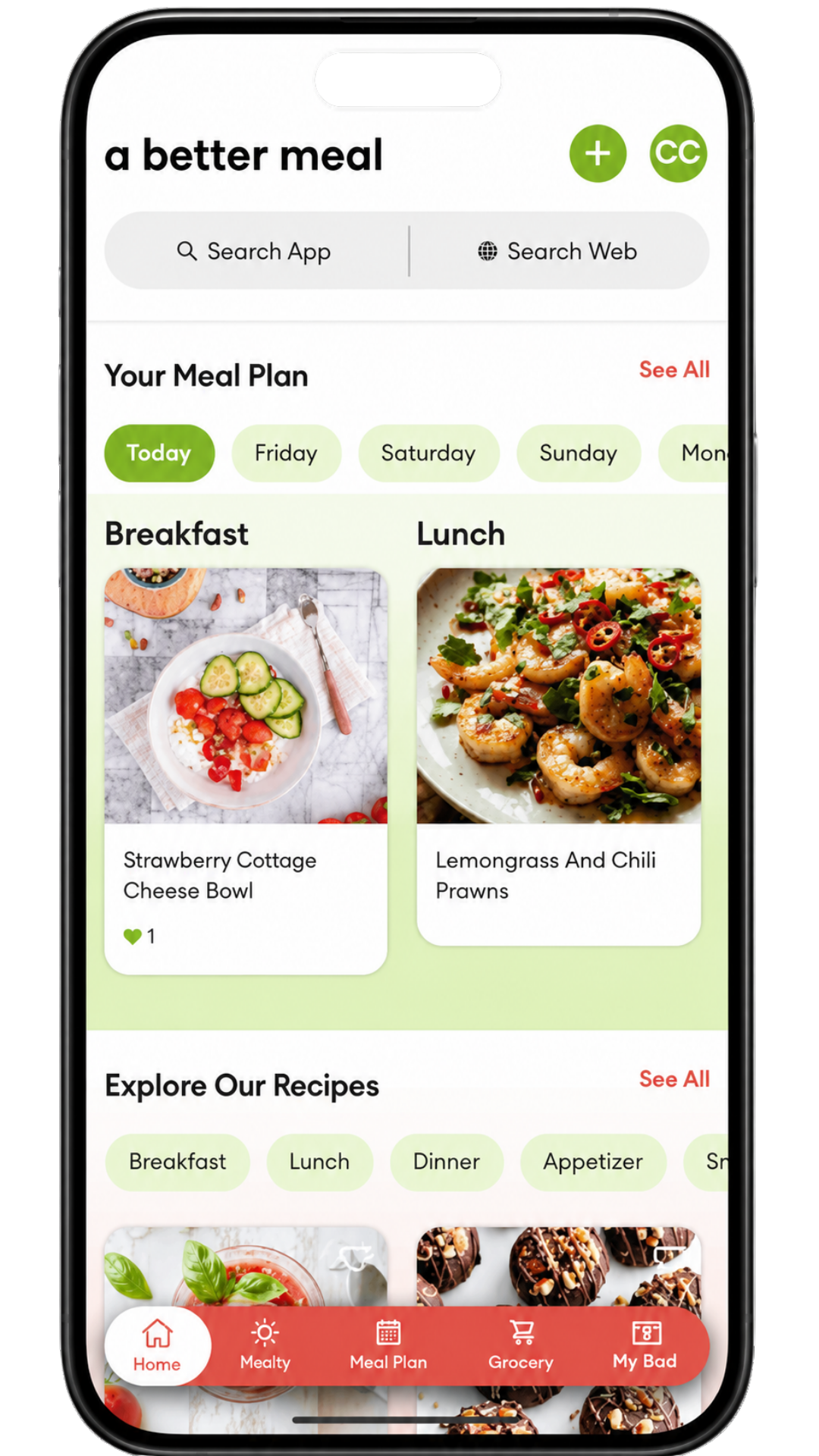
You tell A Better Meal your goals, dietary preferences, allergies, foods to avoid, and what looks good. From that, A Better Meal builds a dinner plan instead of asking you to start from a blank page. The plan uses real recipes. When the week feels too hard, you can use plan actions like reducing time, simplifying instructions, or choosing meals with fewer ingredients. Quick weeknight dinners are the kind of thing it can carry through the week before and the week after.
It doesn’t run the potluck. There’s no sign-up sheet in it, no way to split a menu among guests, and no Friendsgiving mode. What it covers is the household’s own dinners on either side of the party, so the host’s attention goes to the group chat.
The grocery list is created immediately. You send items to it from a single recipe, so the dish you’re bringing can get its own shopping, or from the next 3 days or the next 6. It sorts by aisle or shows by recipe, and editing it leaves the plan alone. Recipes you already rely on can come in too, the casserole card with the butter stain included.
Dinners around the party, already decided
Any dinner in it can give way to one you already love, and that call stays with the host. Good friendsgiving ideas belong to the party, and the ordinary dinners around it deserve an answer of their own.
By the time the group chat reaches message forty, Tuesday through Thursday are already there, and the host is the one person at the party who isn’t running on fumes.
A Better Meal is the plan. See a week of it.
Frequently asked questions
What should you bring to a Friendsgiving?
Bring a dish that travels well and fills a gap. Ask the host which category is still empty, whether that’s a roasted side, bread, dessert or drinks. Baked dishes, dips and anything that’s fine at room temperature hold up best on a car ride, and a duplicate is fine when it’s a favorite.
What are the easiest friendsgiving ideas for a potluck?
Name a few categories out loud early: a main with an owner, then something roasted, creamy, green and crunchy, plus bread, dessert and one drink table. That one message keeps the table from repeating itself without a spreadsheet, and it takes the host about a minute.
What does the host usually provide?
Hosts usually cover the space, the table, the main dish if nobody else claims it, and the basics: plates, cups, utensils and ice. Say so in the group chat. A line like “can someone grab ice” gets nobody, so ask a specific person instead.
How long can potluck food sit out?
Two hours at most. USDA guidance says to keep hot food hot, cold food cold, and to toss perishables that have sat out longer. A slow cooker on warm and a bowl set over ice both help. Put leftovers in the fridge before anyone settles in for a second round of pie.
What’s the difference between Friendsgiving and Thanksgiving?
Friendsgiving is a casual dinner with friends, often a potluck, held in the weeks around Thanksgiving. Thanksgiving is the family holiday on the fourth Thursday of November. The menu and date are looser, and the guests usually split the cooking instead of one cook carrying it.