

A perfect meal plan is a lovely thing to look at. Balanced across the week, a different cuisine every night, color-coded, nothing repeated. It photographs beautifully. It also tends to die somewhere around Tuesday, when one kid won’t go near the curry and the other quietly relocates the broccoli to a napkin. Family-approved meals, the ones everyone will actually eat, win every time, because a plan only counts once the food’s been eaten.
The perfect plan is built to impress whoever’s reading the plan. The people who matter are the ones sitting at the table, and they don’t grade on presentation.
Why the perfect meal plan keeps losing to family-approved meals
The perfect meal plan is designed to look complete. Seven distinct dinners, balanced and varied, the kind of week you’d be a little proud to show someone. That’s the trap. It’s tuned for how it reads on Sunday morning, not for how it goes down at 6 on Wednesday.
Family-approved meals start from the opposite end. They begin with what the people in your house will genuinely eat, and build out from there. Less impressive on paper. Far more likely to end in a fed family and a kitchen that’s gone quiet.
A plan nobody eats is just a wish list with a grocery receipt stapled to it.
What a perfect meal plan actually optimizes for
Look closely at most “perfect” plans and you can see what they’re really solving for. Variety for its own sake. Novelty, because repeating a dinner somehow feels like failing. A kind of tidy completeness that scores well on a checklist. All of it pointed at the plan looking right.
None of that is the same thing as the food getting eaten. A plan can tick every box, balanced, varied, photogenic, and still send half the table off to graze on cereal at 8 PM. The boxes it ticked weren’t the ones that decided the night.
The week doesn’t grade you on variety. It grades you on whether dinner happened without a standoff.
Where perfect meal plans fall apart
You know how the collapse goes. Sunday, full of resolve, you build the ambitious week. Monday’s new recipe lands fine. Tuesday’s “fun” dinner gets a flat reception, and now you’re short-order cooking a backup for the seven-year-old who’s gone teary over a plate she didn’t ask for. By Wednesday at 6:10, the curry that needs three fresh herbs is up against a box of mac and cheese that needs four minutes, and the box is winning before you’ve found the cutting board.
It’s not that the plan was bad. The plan was built for a family other than yours. It assumed adventurous eaters, time to cook from scratch, and a week that sits still. Your actual house has a sauce-refuser, a soccer Tuesday that runs to 7:15, and a Wednesday with nothing left in anyone’s tank.
Perfect plans assume the best version of the week. Family-approved meals are built for the week you actually get.

What family-approved meals get right
Family-approved meals start from a different question. Not “what would an ideal week look like,” but “what will the people in this house eat without it turning into a negotiation.” That one shift changes everything downstream.
It means the plan is built around the household you actually feed, around the kid who’s deep in a beige-food phase, the adult who skips meat on Mondays, the toddler who’ll eat anything as long as it isn’t touching. The meals everyone likes are allowed to come back, because the point was never novelty. It was a fed family without the standoff. And the recipes you already trust, the three or four dinners you know land every time, can come into the plan instead of being crowded out by a stranger’s idea of an exciting Tuesday.
Repetition stops being a sin. Perfection on paper gives way to something far more useful: dinner that actually happens, eaten by the people it was made for.
What the perfect plan quietly costs you
The perfect plan doesn’t fail for free. Every ambitious week that collapses has a price, and you’re the one who pays it. There’s the second dinner you end up making at 6:40 for the seven-year-old who pushed the first one away. There’s the standoff over a plate nobody asked for. There’s the low hum of feeling like you failed at something, when really the plan set you up to fail in the first place.
Stacked over a month, that’s the real cost of optimizing for the wrong thing. The collapsed weeks add up, and so does the slow erosion of trusting any plan at all. After enough Wednesdays that ended in tears and toast, “let’s just order something” starts to look like the only reliable option in the house.
Family-approved meals break that cycle by setting the bar at the right height. A week built around what actually gets eaten skips the whole pile of small failures and just ends with everyone fed.
Where A Better Meal fits
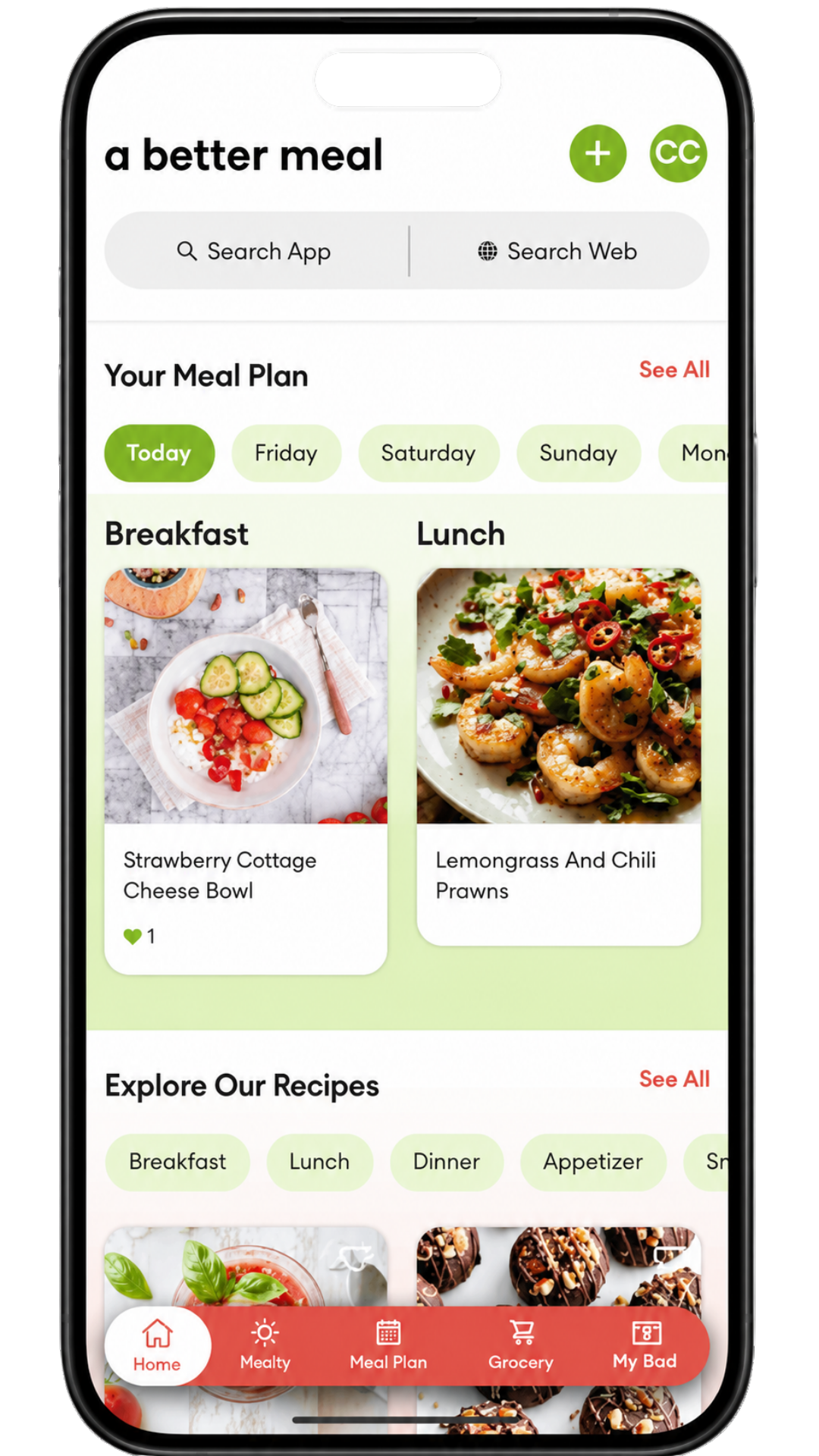
A Better Meal starts from one idea: the plan is the product. Not a flawless-looking week you then fight to enforce. A plan built around the household it has to feed, around the people actually at your table, sitting there when you open the app with the deciding already done.
Because it’s built around your house, it goes after the week that gets eaten rather than the week that photographs well. The grocery list falls straight out of the plan, sorted by aisle and scaled to the number of people you’re feeding, and it opens in the grocery service you already use, close to 50 of them, so a single shop covers the week instead of three trips back for the thing you forgot.
And the plan never holds you hostage to itself. It’s a starting point, not a rulebook. A dinner doesn’t suit the night you’re having? Change it, swap it, or leave the week exactly as it is and just cook. The family-approved part is the whole point; you stay the one who decides what counts as approved.
Dinner, handled. Try a week of meals your family will actually eat.