The kid who ate a turkey sandwich every day through September stops opening the same bag by October, and doesn’t say why. Ask, and the answer’s a shrug. The sandwich didn’t change. Something about the day around it did, and nobody standing in the kitchen that morning was there to see what.
Every household typing “kids lunch ideas” into a search bar is running into some version of that wall: a lunch that worked stopped working, with no reason attached, and the instinct is to go find something new. A Better Meal isn’t built around lunch, but the habit behind that instinct is the same one it’s built to break at dinner — so it’s worth naming before adding a single new lunch idea to the pile.
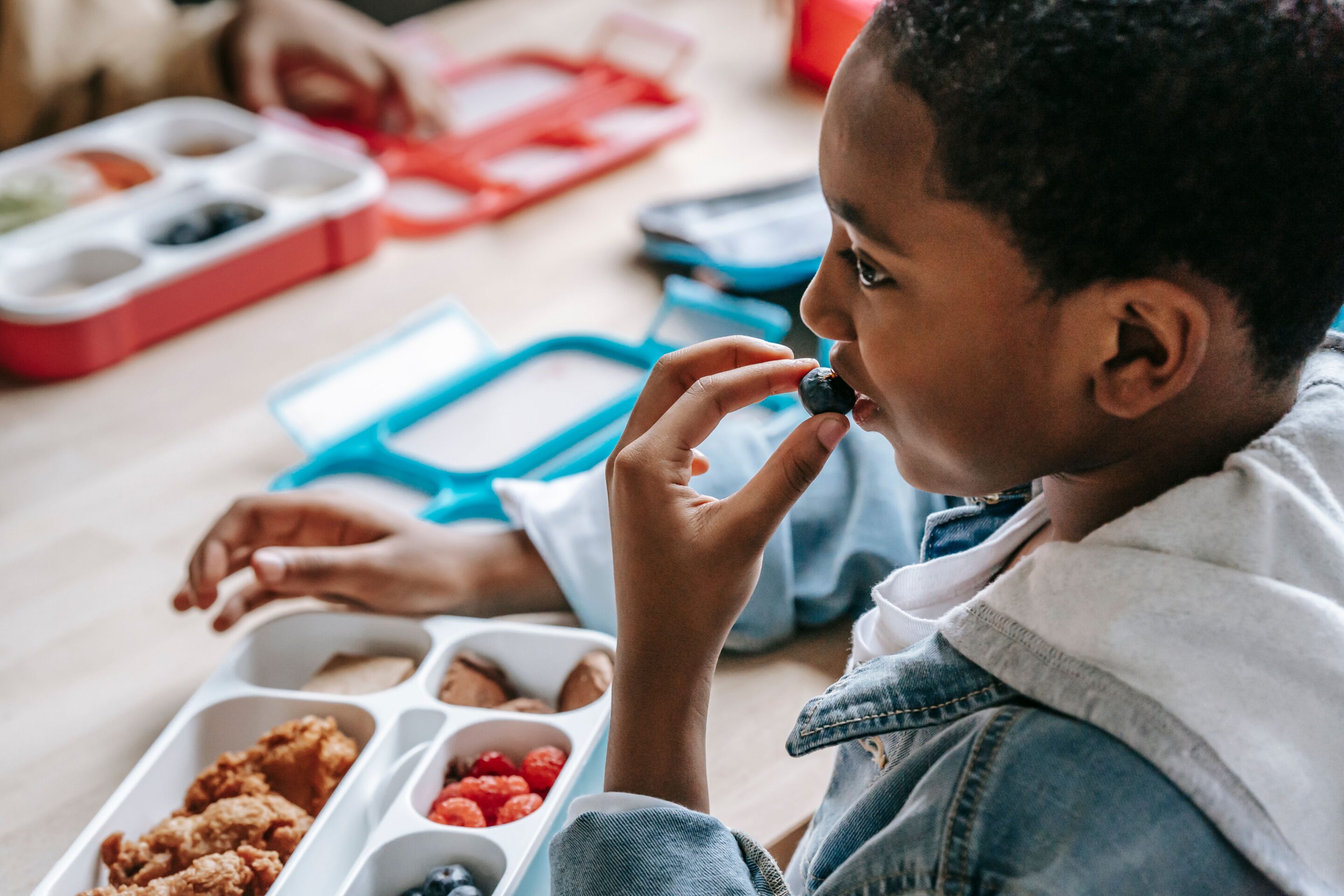
There are two ways a lunchbox comes home. Empty, or close to it, wrappers loose and the container rattling. Or heavy, the same weight it left with, a sandwich unwrapped exactly once and refolded, like evidence nobody asked for. Most kids lunch ideas advice is written for the parent staring at the second kind, standing at the counter, trying to work out what went wrong with a lunch that looked fine at 7 AM.
Nutrition usually isn’t the reason. What matters is whether the food matched what that kid was actually going to eat, that day, in that cafeteria, with the time and attention a school lunch actually gets. A meal can be balanced and colorful and still come home untouched. The lunchbox doesn’t lie about that. For most households, it’s the only feedback they ever get.
What the lunchbox is actually telling you
Three different things can be true when a lunchbox comes back full, not one. The food wasn’t wanted. There wasn’t time to eat it. Or it got traded for somebody else’s fruit snacks in the ninety seconds before the bell, in which case the box came home empty and told you nothing true at all.
Most advice treats an empty container as the finish line. It’s closer to a rough proxy, and a household that’s been packing lunches for a while usually already knows, kid by kid, which empty box means “ate every bite” and which one means “traded it again, no idea for what.”
Nobody’s tracking any of this on purpose. It happens by memory, imperfectly, which is exactly why the same three lunches keep quietly working while a fourth keeps quietly getting swapped for pizza money, and neither fact ever gets written down anywhere.
A parent who’s been at this for a year could probably name the four lunches that always come back clean, off the top of their head, without much thought. Ask them to actually write the list down, though, and it gets fuzzy fast. Was it the cheese-and-crackers that worked, or the cheese-and-crackers-with-grapes? Does this kid finish the yogurt tube, or just open it and leave most of it? The information exists. It’s just never lived anywhere but memory, which is exactly why it keeps needing to get re-discovered instead of simply used.
Why a kid’s lunch isn’t a smaller version of dinner
Dinner gets a full table, an adult paying attention, and a kitchen that can respond in real time if a kid pushes the plate away. Lunch gets none of that. It travels for hours before anyone opens it, and it’s usually eaten cold or at room temperature, because a microwave isn’t guaranteed and a thermos only holds heat so long. The USDA’s National School Lunch Program overview covers what a school day’s lunch period actually has to fit around, and it isn’t built with any one kid’s preferences in mind.
Room temperature is a real food-safety question, not just an inconvenience, for anything perishable that won’t get opened for four or five hours. USDA FSIS’s guidance on packing school lunchboxes safely is written for exactly that gap, the stretch between a sandwich leaving the fridge at 7 AM and getting opened at noon, and it’s part of why the lunches that actually hold up lean shelf-stable or travel in something insulated instead of staying cold on faith.
Plenty of classrooms are nut-restricted or allergy-aware as a matter of policy, which narrows what’s allowed in that lunchbox before a parent even gets to what the kid likes. The CDC’s food allergies in schools toolkit is written for the school side of that rule, but it’s the same rule shaping what shows up on a kitchen counter at 7 AM.
There’s a social layer dinner doesn’t have, too. A kid eating lunch is eating in front of other kids, on a clock, often racing to get outside for recess. A food that needs two hands and real attention loses to whatever’s faster, even if it was the favorite the week before. Meal planning for picky eaters doesn’t mean two dinners covers the dinner-table version of this same standoff; lunch runs the exact pattern with less negotiating room and no adult in the room to run it.
Most of what ranks for kids lunch ideas treats lunch like a smaller dinner: pick a protein, add a side, done. Lunch runs on somebody else’s schedule and somebody else’s rules, with no adult around to help finish it. Smaller was never the right word for it.
Why the search for a new lunch idea keeps happening
Once a lunch stops getting eaten, the instinct is to look for a new one. That’s a reasonable reflex. It’s also usually the wrong problem. The turkey sandwich didn’t fail. It quietly dropped out of rotation, or got swapped in for “variety,” or got assumed boring without anyone actually asking the kid — and a new idea doesn’t fix a proven one falling out of use for reasons nobody named.
A rotation of four or five lunches that reliably come back empty beats a rotation of fifteen where nobody remembers which ones actually work. That’s not a smaller ambition. Fewer options chosen on evidence, instead of a wider search chosen on hope, is the version of kids lunch ideas that survives an actual Tuesday.
Two kids in one house make this harder, not easier. One would eat the same turkey sandwich through June without complaint. The other decided in October that sandwiches are “boring” and won’t explain further. A household running two kids is really running two separate, overlapping proof lists at once, and most lunch content online is written as if only one kid exists.
Age changes the list too, and not on a schedule anyone can predict. A first grader who ate the same yogurt tube every day in September can decide, with no warning, that yogurt is a lunch for babies by January. Rotation isn’t a fix-it-once project. It needs occasional rechecking, not constant reinvention — closer to a spot-check than a redesign.
What actually holds up in a lunchbox
Lunches that keep coming back empty share a shape, not a specific recipe. Something that travels without going soggy by noon. Nothing that needs assembly at a desk, because there’s no table, just a bench and ten other kids doing the exact same thing on the exact same clock. And something that’s already gotten a yes at least once, because a first-time lunch is a bet, and a twenty-minute lunch period isn’t the place to run the experiment.
A thermos of something warm holds up better than a sandwich for a kid who’s gone cold-food-averse. A deconstructed lunch, crackers here, cheese there, nothing touching, survives better for a kid who’s picky about textures meeting on the plate. Leftovers from a dinner the household already knows worked are a safer bet than anything new, because the proof already happened once, at a table, with someone watching it get eaten.
Portion matters more than it gets credit for, too. A lunch packed at adult-sized portions comes home half-eaten not because the food was wrong but because there was too much of it and too little time to finish it. A smaller amount of something proven, with a second small thing added on the side, tends to disappear completely where a bigger version of the same food doesn’t. Empty containers are partly a food question and partly a math one.
A Better Meal doesn’t plan lunch. It plans dinner, and it says so plainly, because a leftover-based lunch idea is only as good as the dinner behind it. What it can do is protect the part of this that’s actually hard: keeping the proven ones in view instead of letting them quietly disappear.
The same list, not a new one
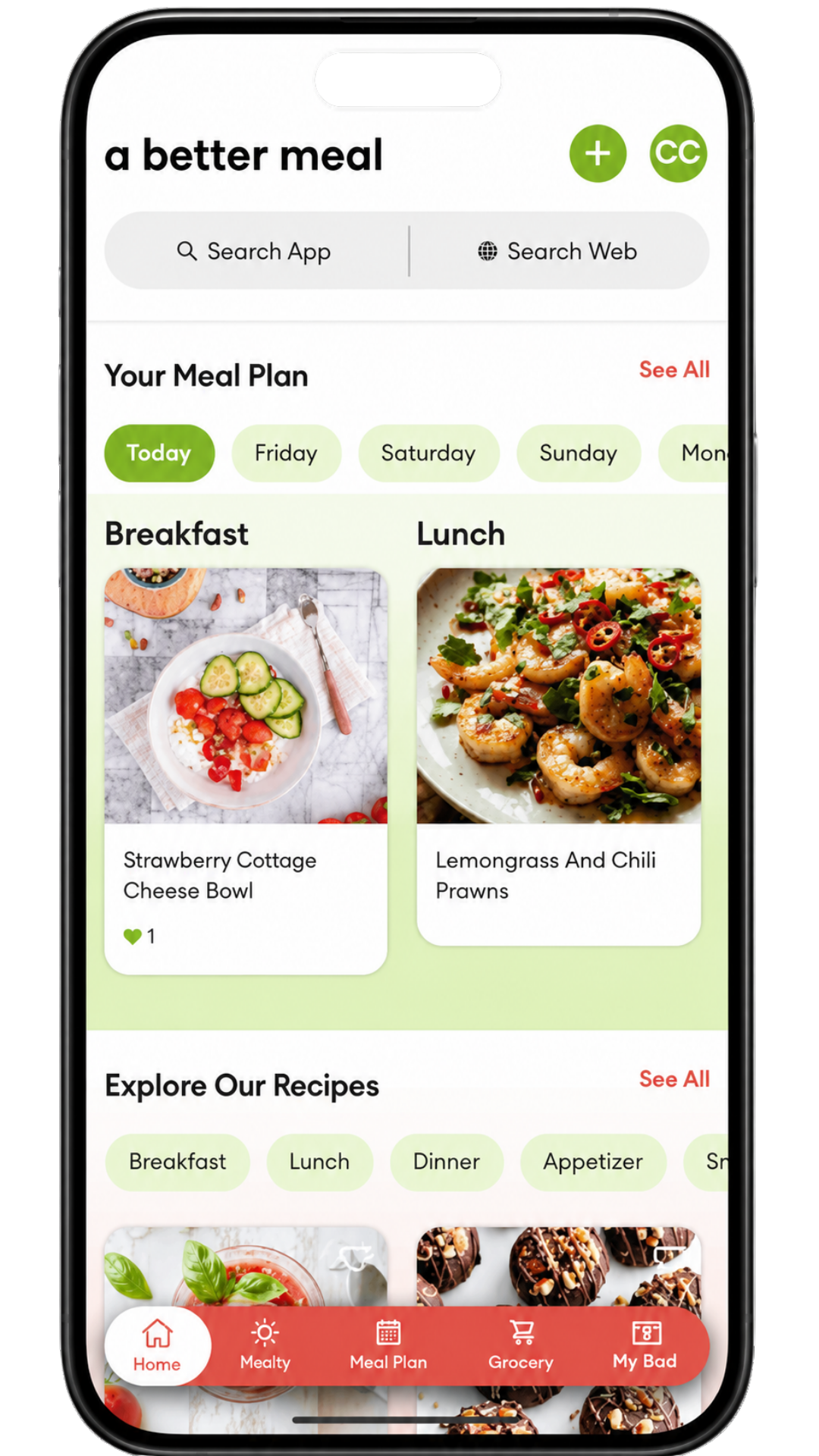
Introducing My Stuff, A Better Meal’s personal recipe organizer, exists for exactly this kind of thing: a place to keep the dinners, and by extension the next-day lunches built from them, that already have a track record, instead of relying on memory to know which ones those are. It doesn’t grade a recipe as healthy or unhealthy. It just keeps it somewhere it won’t get lost between one Tuesday and the next.
Recipe import works the same way, in the other direction. A Better Meal lets a household bring in the recipes it already trusts, rather than starting from a blank plan every time. If a family’s proven turkey sandwich or a go-to leftover dinner didn’t come from inside the app to begin with, it doesn’t have to be rebuilt there from scratch to stay in rotation.
Allergy and food-preference information a household enters once, during setup, is the same information that matters for a lunchbox: what a kid won’t eat, what a kid can’t eat, and what actually gets requested twice. Onboarding asks for goals, dietary preferences, allergies, and foods to avoid, and A Better Meal builds a dinner plan from that instead of a blank page. None of it turns into a lunch plan on its own, but it means a household isn’t re-explaining a nut allergy to two different systems, one for dinner and one for everything else.
Grocery shopping benefits from this too, in a more literal way. The list is created from the dinner plan in one action, sorted by aisle, and the edits are non-destructive, so a proven lunch item rides on the same trip instead of needing its own. A grocery list by aisle fixes the trip. The plan fixes the week covers exactly how that mechanic works: adding the crackers and the second sleeve of clementines doesn’t touch Tuesday’s dinner at all, and neither has to become its own decision.
This isn’t specific to lunch, either. Why family-approved meals beat perfect meal plans makes the same case for dinner: the best plan is the one the actual household will eat, not the most creative one on paper, tracked well enough that it doesn’t have to be reinvented every week out of forgetting what already worked. A kid’s lunch runs on the identical logic, one grade level down.
A kid’s lunch, like a kid’s dinner, holds up better proven than reinvented. The lunchbox that comes home empty already told the household what to pack tomorrow. The job was never finding more kids lunch ideas. It’s trusting the ones that already came back clean.
The plan you keep meaning to make? It’s already in the app. Get your family’s meal plan ?