A stocked freezer is supposed to buy back time. Cook once on a slow afternoon, eat for free three weeks later — that’s the whole appeal behind every freezer meals search, and it’s a real one. Most freezers don’t deliver on it.
Not because the cooking fails. A pot of chili freezes fine. So does a lasagna, a tray of enchiladas, a dozen breakfast burritos wrapped in foil. Freezing was never the hard part. What’s hard is everything that happens after the lid goes on: remembering what’s actually in there, and then deciding, on some ordinary Tuesday three weeks later, that tonight is the night it gets eaten instead of whatever’s faster.
That gap is why freezer meals show up in search more as a hope than a habit. Nobody’s short on recipes that freeze well. Pinterest boards and recipe blogs are full of them. What’s missing is a reason to open the freezer before opening a delivery app.
Why most freezer meals never get eaten
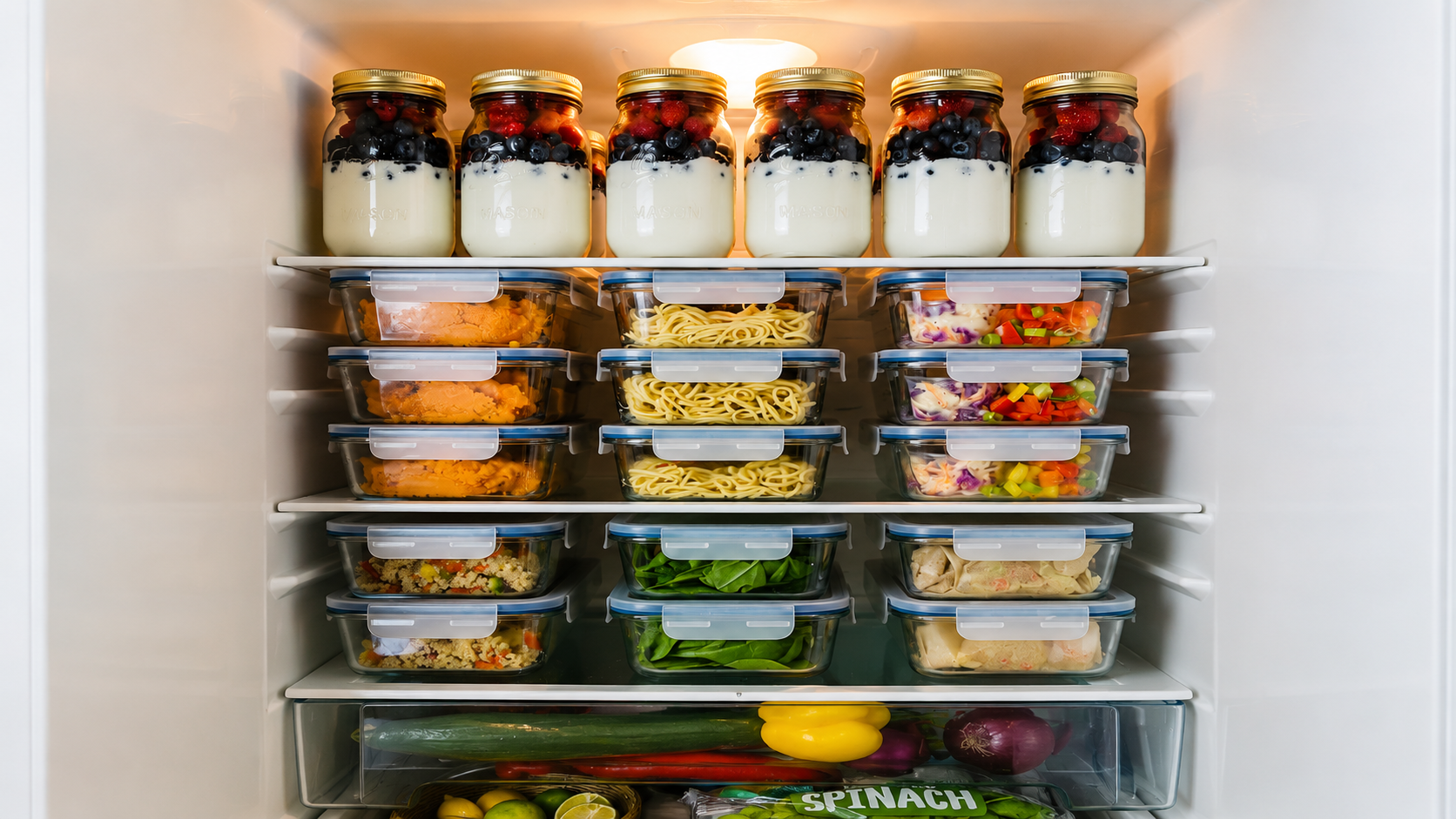
Here’s the pattern. A weekend arrives with some open time in it. Someone makes the most of it: a double batch of chili, a second pan of enchiladas, containers labeled in marker and stacked two deep in the door shelf. It feels productive, because it is. For about an hour, the freezer holds four or five decided dinners nobody has to think about yet.
Then an ordinary week happens on top of it. Monday’s dinner gets cooked, or doesn’t. Tuesday’s does too. The frozen containers sit there, one layer further back every time something new goes in front of them. Nobody’s avoiding them on purpose. They’re just never the answer to what’s for dinner tonight, because a stack of containers in the back of a freezer was never part of anyone’s actual deciding process.
Two containers marked SOUP — MARCH are still in there in July, and nobody in the house can say with any confidence what kind of soup, or whether it’s still good. That’s not a failure of effort. Whoever made it did the hard part already. It’s a failure of the container ever getting picked, on any of the roughly sixteen Tuesdays between March and July when it could have been.
This is where A Better Meal starts, and it’s a smaller starting point than it sounds: not what to freeze, but what makes a frozen dinner get chosen at all.
It isn’t that the freezer cooking failed. The chili was good. The dumplings would have been good too, eaten within a reasonable stretch of being made. What happened is that a decision got made once, in the kitchen, and never got made again anywhere it mattered: on a calendar, in a plan, anywhere that would have put the dish back in front of someone on the night it was actually for.
Somebody comes home from the store with a bag of egg noodles and chicken thighs, pleased with a plan for chicken and dumplings, only to find a container of the same dish, made two months earlier, already sitting in the door shelf where nobody looked before the store run. Two decisions, made for the same night, by two different people who never compared notes. Eventually the freezer gets cleaned out, months later, and whatever’s left goes in the trash with a faint sense of guilt attached. The batch cooking wasn’t wasted. It just never connected to an actual night.
Cooking ahead and deciding ahead are two different jobs
Freezer meals get sold on one promise: dinner without deciding, weeks out. The advice built around them almost always treats it as a cooking problem instead: freeze the right things, in the right containers, in the right portions, and the rest follows. True as far as it goes. It skips the part that actually decides whether any of it gets eaten.
Cooking ahead answers one question: is dinner ready. Deciding ahead answers a separate one: which dinner, on which night, and does it fit what that night actually needs. A freezer full of soup solves the first question completely. It doesn’t touch the second. Soup is ready. Whether soup is right for a Thursday when nobody’s opened the freezer since March is its own decision, and it’s the one that keeps not getting made.
That split matters more than it sounds like it should. A household that’s great at the first job and bad at the second one ends up with a freezer full of good food and a Tuesday spent ordering out anyway, which is the exact outcome the freezer was supposed to prevent. Being organized about batch cooking and being organized about deciding aren’t the same skill, and getting better at one doesn’t automatically fix the other.
That’s the same gap behind why weekly meal planning feels exhausting for busy people generally. The food is rarely the bottleneck. The deciding is. A stocked freezer doesn’t remove that decision. It just relocates it somewhere colder and less convenient, where it’s even easier to skip.
Where “double the recipe and freeze half” runs into trouble
The most common freezer-meal advice is to just cook twice as much of whatever’s already on the stove and freeze the extra. Not bad advice. Not enough on its own, either, and it’s worth naming why: doubling a recipe multiplies the cooking. It does nothing about the deciding.
Fill a freezer that way and it grows unevenly. Whatever the household happened to be making gets doubled, so the freezer ends up with three containers of the same chili and one lonely bag of dumplings from a night four months back that nobody quite remembers making. There’s no plan behind what’s in there. Just leftover momentum from whatever was already on the stove that week.
The other failure runs the opposite direction: a whole weekend spent cooking five different dishes specifically for the freezer, an ambitious project that works exactly once. It takes real effort to sustain. So it doesn’t get repeated, and the freezer that comes out of one heroic Sunday empties out within a month with nothing behind it to refill it.
Neither failure is really about the freezing. One produces too much of the same thing with no variety behind it. The other produces plenty of variety with no repeatable rhythm behind it. Both end at the same place: food in the freezer, and no system for getting it onto a plate on the night it would have actually helped.
4.8 from 2,400 App Store reviews
Trusted by 50,000 families
“Finally an app that actually plans my week instead of just saving recipes. — Sarah, App Store”
4.8 from 2,400 App Store reviews
Trusted by 50,000 families
“Finally an app that actually plans my week instead of just saving recipes. — Sarah, App Store”
What makes freezer meals worth the freezer space
Freezer space is earned, not just filled. It goes to a meal that’s already assigned to a night before that night arrives, not stocked and hoped for. The difference sounds small. It changes everything about whether the container gets opened.
A Better Meal treats a frozen dinner the same way it treats any other night in the plan: as one more thing the week gets built around, not a separate stash somebody has to remember exists. You tell it your goals, dietary preferences, allergies, foods to avoid, and what looks good. From that, A Better Meal builds a dinner plan instead of asking you to start from a blank page. A freezer night fits into that plan the same way a fifteen-minute stir-fry does. It’s just Thursday’s dinner, already decided, and one of the two happens to already be cooked.
That’s a smaller claim than it sounds like. The app doesn’t cook anything, and it doesn’t decide what goes in the container. It just decides which night gets it, the same ordinary decision it makes for a sheet-pan dinner or a stir-fry, so a dish that’s already done doesn’t have to compete against a dish that isn’t for the same slot on the calendar.
It can’t see the freezer. A Better Meal doesn’t know that soup from March is still in there, the same way it doesn’t track what’s in a pantry or a fridge drawer. What it does is put a frozen dinner on a specific night as part of an ordinary week, so the dinner isn’t competing against anyone’s memory of what’s stacked in the back. That night can still move. If a frozen dinner doesn’t sound right for the week it lands in, plan actions like reducing time, simplifying instructions, or choosing meals with fewer ingredients swap it out without anyone rebuilding the week from scratch. The plan’s a starting point, not a contract.
How long freezer meals actually stay good
This matters more than most freezer-meal advice admits, because the calm of a stocked freezer only holds if what’s frozen is still worth eating once it gets pulled out. Frozen food is safe indefinitely as long as it’s stayed at 0°F the whole time. Freezer time is a quality question, not a safety one. Most fully cooked dishes hold their quality for roughly three to four months, and that’s the window that actually decides whether a container gets eaten or quietly thrown out a year later.
Some containers lose their date entirely, which is the March soup problem, just further along. Dating containers helps. What helps more is a system where a frozen dinner already has a night waiting for it, so it never sits long enough for the date to stop mattering.
None of this is an argument against a bigger stockpile. Fifteen good dinners in a freezer is a genuinely calming thing to own, right up until nobody remembers what’s in the back half. The size of the stockpile was never the problem. What it’s connected to is.
The plan freezer meals were always supposed to fit into
None of this turns freezer meals into a chore. A Better Meal is the plan, not the batch-cooking method. Whatever gets frozen this weekend is still up to whoever’s cooking. What changes is what happens to it after the lid goes on. Instead of disappearing into a stack that only gets sorted through months later, a frozen dinner becomes one more answered night in a week that was already decided.
That’s also where the quieter payoff shows up. A settled week that already accounts for what’s stocked away is a week with less need for an emergency grocery run and less reason to order out on a night that was already covered. A Better Meal isn’t a price tracker, and it doesn’t remind anyone to use something up before it goes bad. That’s not a feature it has. The freezer stops being deep storage because it stops being separate from the plan, and reducing how much food goes unused in the first place starts with exactly that kind of settled week, not with a tracking feature.
Meal prep that holds up starts the same way: not with a better cooking method, but with a week that was decided before anyone stood at the counter. Freezer meals are the version of that idea that reaches further out: this week’s cooking, banking a decided night for the week after, and the week after that.
The freezer was never the missing piece, any more than an extra hour on a Sunday was. What was missing was somewhere for a frozen dinner to land: a night that already had its name on it, instead of a queue nobody was checking. Once that exists, stocking the freezer stops being a bet on future willpower. Freezer meals become exactly what they always should have been: cooking now, for a week that hasn’t happened yet.
A freezer full of decided dinners is next month, already partly handled.
A Better Meal is the plan. See a week of it.