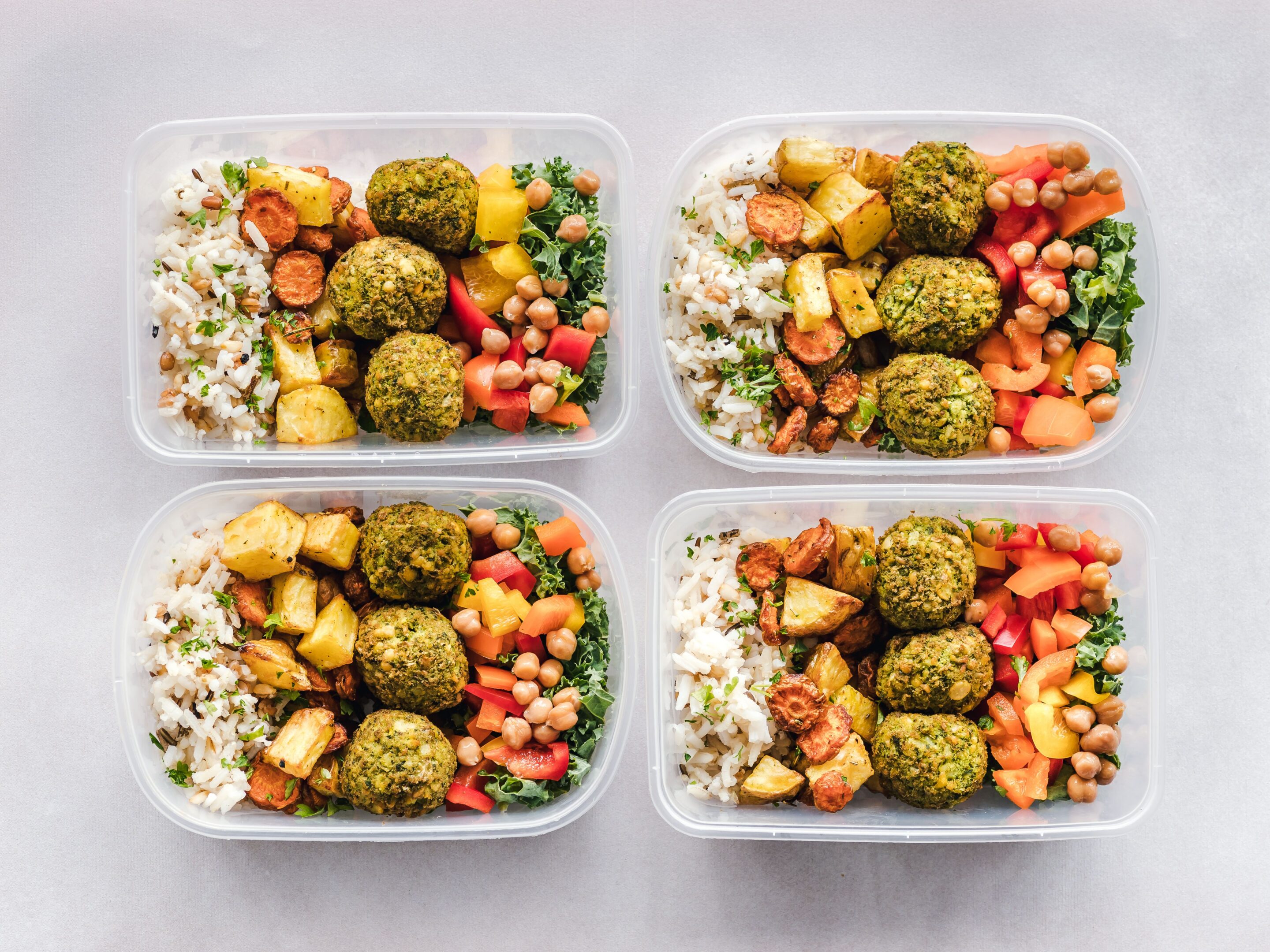
By four o’clock on a Sunday afternoon, the counter already holds four containers, lids snapped down, dinner for four different nights looking back out of the fridge before the week has asked anything of anyone yet. Whoever did this got the good kind of tired. Not the ground-down kind. The kind that comes from finishing something.
It doesn’t happen most Sundays. Most Sundays, the search for meal prep ideas starts around two, runs long, and ends with three recipes chosen more or less at random, because three felt like enough and the afternoon was going. The gap between those two Sundays has nothing to do with which recipes got picked. It’s what happened before any of them did.
A Better Meal exists for that gap specifically: the part of Sunday that happens before the cutting board comes out, where every decision the week needs gets made once instead of five separate times, standing up, already tired.
Why meal prep ideas stall out before the cooking starts
Almost every kitchen that’s tried this runs the same pattern. Sunday opens with intention. A recipe gets chosen, then a second, then a third, and a list gets written, half from memory. The store covers most of it. Not all of it: something’s always missing, a spice, the right size of container, whatever the original recipe called for that got swapped out because the shelf was empty.
Then the cooking starts, and the plan built for an ideal Sunday runs into the actual one. A kid interrupts. A load of laundry needed switching twenty minutes ago. Someone wanders through the kitchen asking when the containers will be ready, and the third recipe is still half-chopped on the board. Three hours becomes five. By the time it’s done, there’s rarely energy left to ask whether Wednesday’s choice was even right for Wednesday. It just got made, because Sunday was the only open slot to make it in.
What breaks first is almost never the cooking. It’s the deciding: four or five meals’ worth of choices, made back to back, on the one afternoon with enough room to make them. Every one of those choices was already sitting there unmade at nine that morning, waiting for whoever had the least energy left to get to it last. A prep session doesn’t fail because the recipes were wrong. It fails because it asked one tired person to make a week’s worth of decisions in a single sitting and called that “planning.”
And the failure doesn’t stay contained to Sunday. It leaks forward. Tuesday’s dinner was decided at hour three of a five-hour session, half-distracted, competing for attention with the laundry and the interruptions. Thursday’s was picked at the very end, when picking anything felt like enough. The containers all look the same lined up in the fridge, but the decisions inside them weren’t made with the same care, because the person making them ran out of care to spend somewhere around Tuesday’s slot.
The problem was never a shortage of meal prep ideas
Search “meal prep ideas” and the results assume the hard part is the menu. Pick five recipes. Batch a protein. Rotate through three grains. That’s the promise printed across almost every list: here are the dishes, go make them.
Choosing five dinners is the easy part, honestly. The hard part is making five decisions in a row, cold, with no real information about how the week is going to go: what’s on sale, who’s around Wednesday and who isn’t, whether the freezer already holds two containers of something similar from two weeks back that never got eaten. Fifty more ideas don’t answer any of that. They just hand over fifty more things to decide between, and a plan built on guesswork has its own way of going stale by week two — the same handful of “safe” preps on repeat, not because anyone chose them on purpose, but because nobody had the energy left to choose anything else.
What’s missing from most “meal prep ideas” content is any acknowledgment that prep is a decision problem that happens to end in a kitchen, not a cooking problem at all. The cooking, once the choices are made, takes roughly the same time either way. What changes the outcome is whether the choosing happened once, calmly, ahead of time, or five separate times at the counter, already behind.
What meal prep looks like once the week is already decided
Prep changes shape once the deciding happened somewhere else first. There’s nothing left to figure out at the counter. No scrolling past three ideas to land on a fourth. No working out, mid-chop, whether Tuesday’s dinner and Thursday’s share an ingredient worth batching. Those decisions got made once, earlier, by something that wasn’t standing in a kitchen at the time.
What’s left is closer to assembly than planning. A protein gets portioned because the week already knows which nights need it. A sauce gets made once and split across two dinners that were grouped together on purpose, not noticed halfway through chopping. A base grain gets cooked in the bigger pot because three separate dinners are drawing from it, not because anyone stopped to notice the overlap. None of that is a technique. It’s just what happens when the grouping already exists before the prep does.
None of it needs a category name to work. A roasted tray of vegetables that shows up in two different dinners. A marinade made once, split three ways. Rice or grain cooked in one batch because Monday, Wednesday, and Friday all needed it and the plan already knew that before anyone stood at the stove. A couple of components portioned into containers with nothing decided about them yet, waiting for whichever night turns out to need something fast. The shapes vary. What doesn’t vary is that the grouping was already there, waiting, instead of getting invented fresh at the counter with a knife in hand.
Ingredients move from a recipe onto the grocery list on their own, pulled from a single recipe, from several at once, or from the next three or six days of the plan. Prepping “half the week” and prepping “the whole week” become two different, deliberate choices, made on purpose, instead of whatever got attempted before the energy ran out.
That’s the difference between a prep session and a decision marathon that happens to involve knives. One of those leaves the person who ran it more tired than they started. The other leaves dinner handled for four nights and the rest of the afternoon still theirs.
What actually gets cooked still comes from what the household likes. A Better Meal can draw from your preferences, saved recipes, and past choices, so the plan being prepped from isn’t the same four dinners in a new order every time. What gets removed is the requirement to make all of that choosing standing up, on a schedule set by whoever’s most depleted that day. The choosing itself stays yours; it just doesn’t happen at the worst possible hour anymore.
A prep session that bends instead of breaking
Five recipes, five containers, a fixed rotation: that’s the do-it-yourself version of prep, and it works exactly once, on the week nothing changes. The first deviation breaks it. A kid decides overnight that last Tuesday’s favorite is now the thing they won’t touch. A practice runs forty minutes long. Someone’s out of town on two nights that were supposed to be covered.
A rigid plan has no answer for any of that. It just sits there, wrong, while the cook improvises around it, which is the exact labor the prep session was supposed to remove in the first place.
This is where a plan-first version earns the difference. Swapping a dinner doesn’t mean rebuilding the week. It means changing one piece of it. Say Thursday was supposed to be the involved recipe, the one with four separate steps, and by Thursday nobody has the patience for four steps. Plan actions in the app can reduce the time that recipe takes, simplify the instructions, or swap in something with fewer ingredients: small adjustments, made in the moment, without starting from a blank page. It doesn’t know your calendar, and it won’t guess which night is the hard one. That part still comes from whoever’s standing in the kitchen. What it doesn’t ask for is a full rebuild every time the week moves.
The prep already finished for Tuesday doesn’t stop being useful because Tuesday changed shape. What changes is which container gets opened first, not whether the afternoon spent prepping it was wasted. Even the recipes brought in from outside the app, the ones a household already trusts, fold into the same plan instead of living in a separate stack of printouts nobody opens twice.
The one grocery trip that makes it worth doing
Every version of meal prep that actually works comes down to a single grocery trip instead of three improvised ones. A trip only stays quick if the list is already sorted by aisle before anyone walks in, and that’s most of what makes the whole thing feel calm instead of frantic. Nobody’s making an emergency run Wednesday night because Sunday’s list didn’t account for what Wednesday needed.
The list comes straight out of the plan the moment it’s built, sorted by aisle or viewable by recipe, and editing it doesn’t touch the plan underneath. A Better Meal can guide the shopping itself by opening a retailer search experience item by item, across close to 50 grocery and delivery services. The products still get chosen and checked out by hand; the list just doesn’t have to be typed in first.
There’s a food-safety question sitting underneath all of this that’s worth naming plainly, because a full fridge on Sunday only stays calming if what’s in it gets eaten before it turns. Cooked leftovers generally hold safely in the refrigerator for three to four days, long enough for a week’s worth of prep to actually get used, not so long that day six becomes a guessing game. Whatever won’t get eaten inside that window is a freezer decision, not a fridge one, and freezing is a legitimate way to hold prepped food safely well past that first week. That’s a decision the plan can make in advance too, instead of leaving it for whoever opens the container on day five and has to guess.
None of this asks the household to trust a stranger’s rotation. The meals are still the ones this household actually eats, chosen from real preferences and whatever’s been cooked and liked before, not a generic template handed to everyone who searches for meal prep ideas this week. What changes is when the trusting happens. It happens once, earlier, instead of five separate times at the stove with everyone waiting.
A prep session that ends with a full fridge and an empty afternoon was never really about the containers. It’s about the week having already been decided before the knife ever came out. The recipes were never the hard part. Deciding on them, five times, alone, at the least energetic hour of the week, was.
That’s what changes about a Sunday like the one at the start of this. The containers still get filled by hand. Someone still stands at the counter and does the actual portioning, the actual chopping, the actual work of turning groceries into dinner. What’s different is what’s not happening at the same time: no scrolling, no third guess at a fourth recipe, no math about who’s around Wednesday done under pressure with a knife already out. The choosing that used to eat the whole afternoon already happened somewhere else, earlier, when there was still energy left to spend on it.
Four containers by four o’clock is what a Sunday looks like once the week already got decided, before it ever had the chance to be figured out in the moment. No trick to it. No extra willpower required.
Dinner, handled. Try a week with A Better Meal.