
A subscription meal plan is a menu someone else already wrote. eMeals sends seven dinners a week, built around a plan style you picked, Keto or Clean Eating or Kid Friendly among them, and what’s left for you to decide is which of those seven actually belong on your table. A Better Meal works from the other direction. It starts with your household, not a plan style, and builds the week from what it hears back.
Both promise the same relief: stop staring at an empty week and start cooking something. Both get compared constantly, on forums, in app store reviews, in the same “best meal planning app” searches. The difference between them isn’t obvious from the outside, because both hand you something that looks, from a distance, exactly like a finished plan.
Up close, they solve it from two different directions, and the direction is the part that actually matters once the first week is over and the second one has to happen on its own.
Why eMeals and A Better Meal Keep Getting Compared
Type “eMeals” into a search bar next to almost any other meal-planning name and the results blur together fast. Both are a meal plan service. Both promise the deciding gets handled somewhere other than your own head, at your own kitchen table, at the worst possible hour. Both show up on the same shortlists when someone searches for a meal planning subscription, or types “emeals alternative” looking for something that fits their household differently.
The overlap is real. It’s also shallow once you look at where each one actually starts. An eMeals meal plan and A Better Meal’s plan solve the same complaint, the blank week, from opposite directions. One writes the menu first and asks you to fit your household into it after the fact. The other asks about your household first and writes the menu from what it hears. Comparing subscription meal plans against a household-first plan is really comparing two different starting points, not two versions of the same product wearing different branding.
That’s worth sitting with for a second, because it’s the part most comparisons skip on their way to a features table. A features table treats “has a shopping list” and “has fifteen plan styles” as the same kind of fact. They aren’t. One is a mechanism. The other is a starting assumption about who the plan is for.
The person searching usually falls into one of two camps, and the split matters more than either landing page admits. One wants a subscription because the variety itself is the appeal, a new plan style to try, someone else picking the theme. The other has a household with real constraints, an allergy, a picky eater, a diet somebody’s actually following, and wants the plan built around that from the start rather than edited around it after the fact.
Search interest treats “meal plan service” and “emeals subscription” almost like synonyms, which is exactly the confusion worth clearing up before anyone signs up for either one. eMeals is a menu-writing service with grocery integrations attached. A Better Meal is a planning service built from a household’s own answers, with grocery help attached in a different, less finished form. Calling both simply “a meal plan service” flattens a distinction that turns out to matter a lot once the first week actually arrives.
What eMeals Gets Right
Give eMeals its due, because a lot of what people assume is a weakness turns out not to be one. An eMeals subscription doesn’t lock you into someone else’s seven dinners with no way to touch them. You pick which of the seven dinner menus you want each week, and the app builds the shopping list from whatever you actually picked, personal family recipes and recipes pulled in from anywhere on the web included. A week that started as somebody else’s editorial choice can end up mostly your own by the time you’re finished with it.
None of that is a small thing. A household that already has recipes it trusts, the dish everyone actually finishes, the dinner that never gets old, doesn’t have to abandon them just because a subscription showed up with its own seven ideas. Folding those into the plan is a real answer to a real complaint people have about subscription meal plans in general, that following one means giving up what already worked in that kitchen.
A Better Meal does something similar in spirit. Recipe import, bringing the meals a household already trusts into the app instead of starting from someone else’s idea of a Tuesday, is one of its own stronger features. The two aren’t identical in mechanics, but the instinct behind both is the same. A plan that refuses to let go of what a household already knows how to cook is doing something right.
The plan styles are a genuine strength too. Fifteen separate plan styles exist: Clean Eating, Keto, Quick and Healthy, 30 Minute, Budget Friendly, Kid Friendly, Slow Cooker, Paleo, Heart Healthy, Diabetic, Low Calorie, Low Carb, Gluten Free, Plant Based, and Mediterranean. That’s more range built into the starting menu than most meal plan services bother with, and it means the menu at least gets somewhere close to a household before anyone touches it.
Some of the fifteen map directly onto a dietary framework a household is already following, not just a loose preference. Keto, Paleo, Low Carb, Gluten Free, Diabetic: picking the right style up front does real work before a single dinner gets chosen, narrowing seven weekly options down to ones that already fit a real constraint instead of seven that might.
It’s a real convenience, and worth saying plainly instead of hedging around it. Somebody in the house doesn’t eat green beans, though, and no one wrote that down anywhere eMeals can see it before the menu gets written. The seven dinners on any given week were built for the plan style someone subscribed to, not for that one fact about that one household, and sorting out which of the seven will actually get eaten is still a job for whoever’s reading the menu that morning.
Where the Two Plans Actually Decide Differently
An eMeals meal plan gets written before your household enters the picture at all. A team decides the week’s seven dinners for whichever style you subscribed to, and picking which of those seven belong on your table happens after the fact, every single week, for as long as the subscription runs.
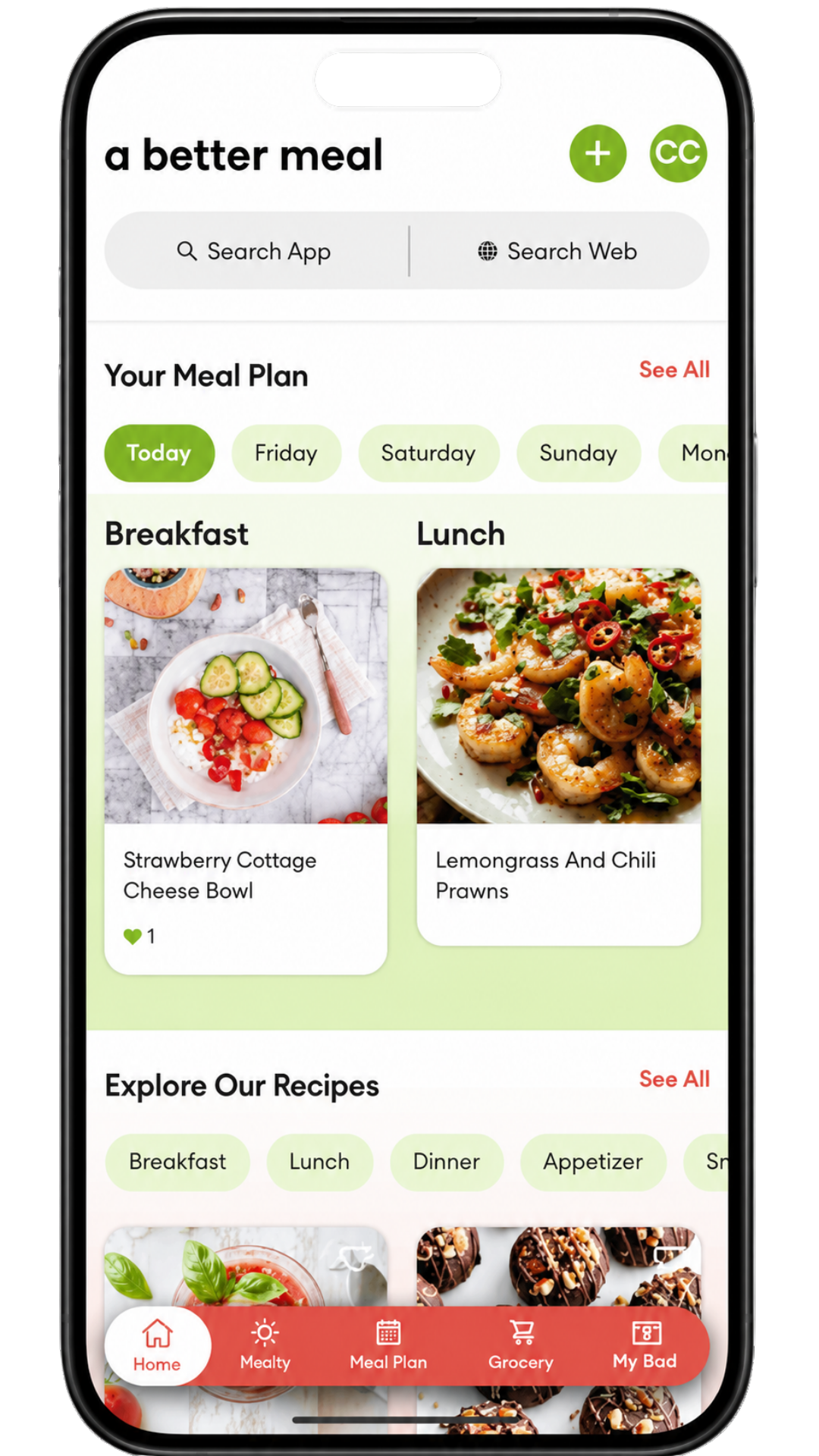
You tell A Better Meal your goals, dietary preferences, allergies, foods to avoid, and what looks good, before anything about the week gets decided. From that, A Better Meal builds a dinner plan instead of asking you to start from a blank page. The household answers once, up front, and the plan gets built around that answer instead of the other way around.
That distinction is easy to miss, because both services end with something called a plan sitting in front of you by Sunday. A plan built for a household and a workspace that household still has to run turn out to be different things, even when they share a name and both technically arrive with dinner already attached to a day.
Assuming the two are basically the same product, because both eventually produce a grocery list and both eventually put dinner on the table, skips the part that actually determines whether either one keeps getting used past the first month: whether the plan was built for this specific household, or for a plan style this household happened to subscribe to.
Buying a subscription is the easy part. Working it stays a weekly job for as long as the paying continues. Mark Semmelbeck, A Better Meal’s founder, put the distinction plainly: “We don’t want to be a tool for doing a task. We are a solution to a problem.” Reading eMeals’ seven dinners and sorting the household’s real answer out of them is a task, however well the menu was written. A plan that already carries that answer in skips the task entirely, because the answer was the first thing it asked for.
Most weeks, a sourdough loaf gets bought whether or not anything on a written-in-advance menu calls for it, because somebody in the house eats toast no matter what dinner turns out to be. An editorial menu, written for a style rather than for a specific household, has no way to know that. A Better Meal asks for exactly that kind of fact on the way in, before the week ever gets written, and it can also draw from your preferences, saved recipes, and past interactions so the plan isn’t just the same hand-built rotation every week.
There’s a second layer to that, too. When the week feels too hard, you can use plan actions like reducing time, simplifying instructions, or choosing meals with fewer ingredients, instead of scrapping the whole week and starting from scratch. An eMeals subscription doesn’t have an equivalent lever. The menu was built to be a good week for a plan style in general, not built to bend around one particular week that turned out harder than expected.


The Shopping Step, Honestly
Worth being straight about where eMeals is simply ahead, because a fair comparison doesn’t get to skip its own weak spot. eMeals can send that list straight to grocers like Walmart, Amazon, Kroger, or Instacart, most of them places a household is already shopping at anyway. That’s a real, working handoff, built over years, and there’s no point pretending A Better Meal matches it today.
A Better Meal can guide you through shopping online by opening a retailer search experience item by item. You still choose the products and check out yourself. That’s a weaker mechanism than a direct send to a retailer partner, and dressing it up as anything else wouldn’t survive five minutes of actually using it.
It’s a real gap, and it’s also not the whole story. A working retailer handoff solves the last five minutes of a shopping trip. It has nothing to say about the twenty minutes before that, standing in the kitchen deciding what actually needs to be on the list this week, which is the part that runs longer and wears a household down more over time.
That gap sits alongside a wider roster on A Better Meal’s side. Close to 50 grocery and delivery services are on A Better Meal’s roster, reachable through that guided search even without the same automatic handoff eMeals already has running with the grocers it sends lists to directly. Breadth doesn’t close the mechanical gap. It does mean the guided search works with wherever a given household actually shops, not only the handful of major chains a direct handoff depends on.
What neither mechanism changes is which list you’re shopping from in the first place. The jarred salsa that seemed like a fine shortcut for taco night sits in the door of the fridge three weeks after the plan moved on to something else entirely. Shopping against a week that’s already been decided, whichever service did the deciding, is the ordinary advice for keeping that kind of thing from happening at all. Deciding what actually belongs on the list, for this household, before anyone opens a grocery app, is the harder question underneath the easier one. That’s the one A Better Meal is built to answer first, even while the retailer handoff itself catches up.
The Honest Verdict
eMeals earns its reputation honestly. It’s been doing this a long time, and the mechanics hold up: fifteen plan styles, a real recipe library behind each one, working relationships with the grocers most households already use every week. Anyone genuinely weighing an eMeals alternative should know exactly what they’d be giving up, not just what they’d stand to gain.
What eMeals can’t do is know your household before it writes the menu. The dinners get decided first, for a plan style, by a team that has never met your table and never will. You’re the one who checks the week against the people actually eating it, every single week, for as long as the subscription keeps running.
One kind of household really is better served by eMeals than by A Better Meal today, and it’s worth naming instead of arguing around it. Somebody who wants a new plan style to try each season, who likes having a team of professional menu writers behind the week, and who mostly shops at one of the grocers eMeals already sends a list to, gets a smoother experience from eMeals than from a plan still catching up on the retailer side. That household made a reasonable choice. eMeals is just answering a different question than the one A Better Meal is built for.
A Better Meal starts from the other direction entirely. The plan gets built around a household that answered first, not fit to one after the fact once the menu’s already written. A comparison built the same way, looking at what actually keeps a meal plan in use past the first month rather than what looks good in an app store screenshot, lands on a version of the same point from a different angle.
If what’s actually bothering you is counting calories rather than deciding what to cook in the first place, that’s a different question with a different answer, and a different comparison settles that one more directly than this one does. But if the real question is who’s writing the week and how well they know your table before they write it, eMeals and A Better Meal are answering it from opposite directions. Only one of them asked first.
None of this makes eMeals a lesser service. It makes it a different one, built to answer a different opening question than the one A Better Meal starts with. The honest comparison was never about which app has more features stacked up in a table. It was always about which one asked the household anything before writing the week.
Where the Deciding Actually Ends Up
Out-subscribing eMeals was never the point. A Better Meal exists to skip the part where a household has to fit itself into somebody else’s already-written week, over and over, one Sunday at a time.
Nothing about the plan stays fixed once it exists. A dinner that doesn’t fit gets swapped or dropped, and the rest of the week doesn’t have to reset just because one night changed its mind. The household that answered the questions up front is still the one running things once the plan shows up in the app. eMeals plans the menu and leaves the sorting to you. A Better Meal plans around the people actually at your table, pork chops and green beans and the sourdough that gets bought no matter what’s on the list, so there’s less sorting left to do once dinner actually arrives.
The two aren’t solving for the same kind of Tuesday. eMeals solves for a household willing to sort a written week down to size. A Better Meal solves for a household that would rather answer a few honest questions once and let the week arrive already sized to fit.
That’s not a small difference once you’ve lived with it a few months. A written menu asks a household to keep proving it doesn’t fit, week after week, one skipped dinner at a time. A plan that started with the household’s own answers doesn’t need that proof again. It already has it.
By 7:15 on a Thursday, the pork chops are still sitting in the freezer in a lot of eMeals households, because that week’s Thursday menu changed partway through and nobody caught the swap before the shop happened. That’s what it costs when the deciding gets done somewhere else, for a household nobody on the writing team has met. eMeals plans the menu. A Better Meal plans for your household, and that’s still the difference the whole comparison comes down to.
Here’s what a plan built for your household actually includes, from the questions it asks on the way in to the list it hands you once the week’s decided.
Open the app. The plan’s already there.
See what a plan built for your household looks like.