
Most vegetarian households didn’t decide to be vegetarian. One person did, and the kitchen reorganised itself around them.
Nobody argued about it. Dinner simply used to have one answer and now it has two, and the second one gets invented most nights by whoever reaches the kitchen first. Pasta again. Eggs again. The halloumi that was genuinely interesting back in April.
That’s the gap a vegetarian meal planner is supposed to close, and most of them close a different one.
Where a vegetarian week actually gets hard
The recipes were never the shortage. There are more good meatless dinners in circulation than a household could work through in a decade, and another forty arrive every time anyone opens anything.
The shortage is decisions, and cooking without meat quietly doubles them. A meat-centred week has a default shape most people can produce half asleep: a protein, a starch, something green. Take the centre out and that shape has to be rebuilt from nothing every night. What’s carrying this meal. Will it actually fill a hungry fifteen-year-old. Does it repeat Monday. Is anyone going to complain.
Four questions, five nights, every week, forever. The exhaustion people report from weekly planning isn’t about cooking, and in a vegetarian house it arrives faster.
What most vegetarian meal planners actually give you
Open a typical one and you find a library with a filter on it. Meat-free toggled on. Maybe a nutrition column. Sometimes a printable grid with seven empty boxes.
All of that is a catalogue, and a catalogue answers what could we eat. Standing in a kitchen at half six, nobody has that question. The question is what are we eating, which is a decision, and a filter has never made one.
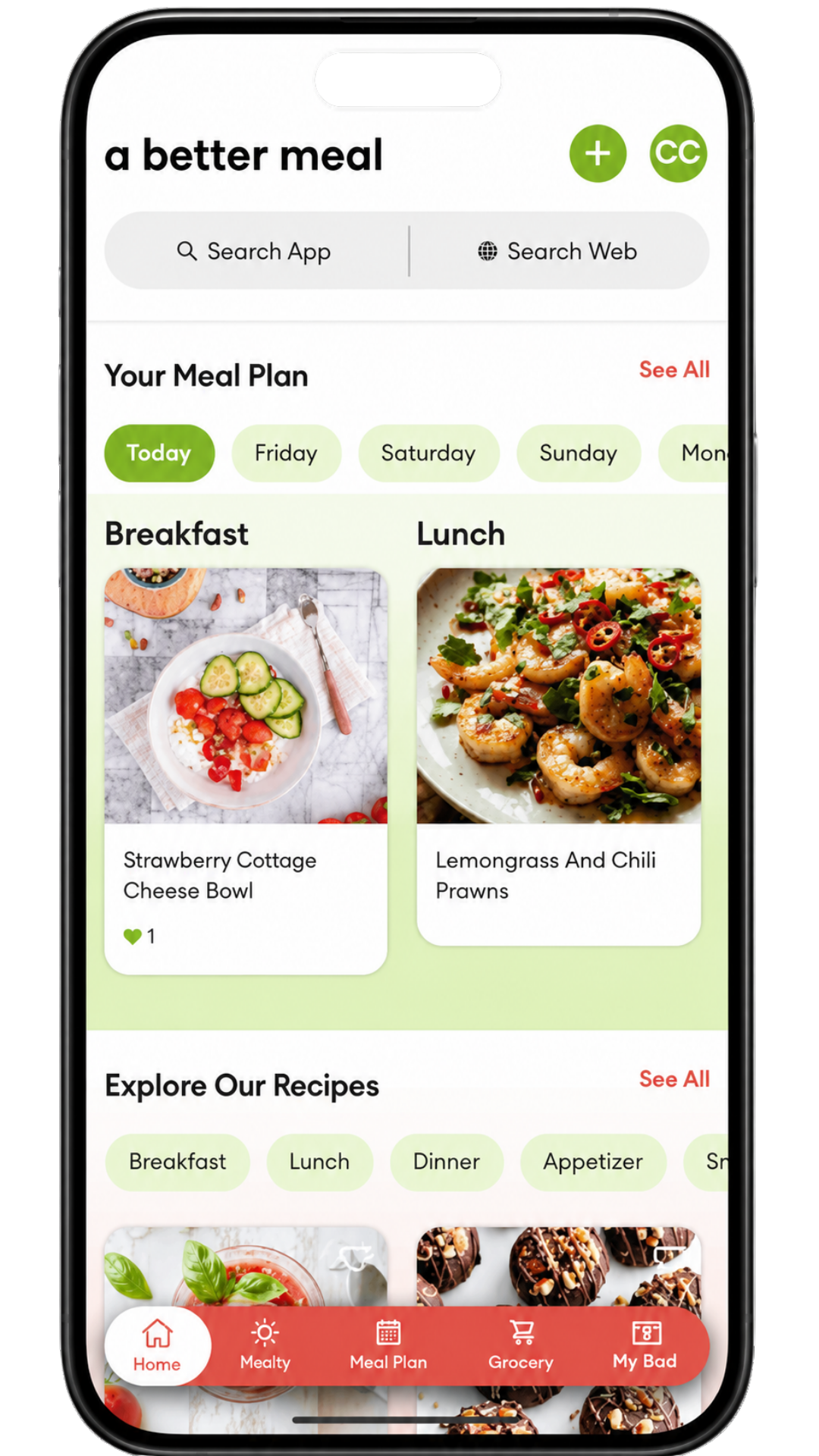
A Better Meal starts at the decision instead. The plan comes built, with the week’s dinners already chosen, so those seven boxes are full before anyone opens the app. You tell it your goals, dietary preferences, allergies, foods to avoid, and what looks good. From that, A Better Meal builds a dinner plan instead of asking you to start from a blank page. Vegetarian sits in the picture the plan gets built from, alongside everything else the household has said about how it eats.
Which is the whole test for a vegetarian meal planner, really. Does the week arrive decided, or does it arrive sorted.
The mixed household nobody plans for
Very few vegetarian households are entirely vegetarian, and this is the part planners tend to skip.
One person doesn’t eat meat. One will eat anything put in front of them. One is eight and has firm opinions that change on a schedule nobody can predict. The instinct is to cook twice, and at 6:50 on a Tuesday that means chilli in one pan and mince browning in another, which is the most reliable way ever devised to make somebody feel guilty about a choice that was theirs to make.
A week that holds does something else. It leans on meals that were never built around meat to begin with, so nothing has been removed from them and nobody is eating the reduced version. Dal isn’t a compromise. Nor is a good squash risotto, or gnocchi with brown butter and sage. The trick is feeding a mixed household without running two kitchens, and it’s a planning problem rather than a cooking one.
What a plan that already decided looks like
Tuesday’s dinner is dal, and the rice for it has been sitting in the cupboard since the weekend. Bought on purpose, not in hope.
Nobody negotiated that. Nobody worked out whether it was fair, or whether the fifteen-year-old got their turn last week. It was settled in advance by something that had the whole week in front of it, which is the one vantage point nobody standing at a hob at five o’clock has ever had.
When a week turns out harder than the plan assumed, you can use plan actions like reducing time, simplifying instructions, or choosing meals with fewer ingredients. It can’t see your cupboard and won’t pretend otherwise. What it can do is stop the week being rebuilt from scratch every Sunday.


The recipes you already trust come with you
Anyone who’s been cooking vegetarian for a while has a working set. The dal that always lands. The traybake with the chickpeas and the sumac. A stew somebody’s aunt makes better than the internet does.
Recipe import matters more here than almost anywhere else, and it’s the reason a dietary household can move without losing anything. The recipes you already rely on come into A Better Meal with you, and the plan builds around them rather than around a stranger’s idea of what a meatless week looks like. That’s the difference between a planner that replaces your cooking and one that schedules it.
It also settles the objection most people have to trying a vegetarian meal planner in the first place. Nobody wants a fortnight of unfamiliar food while an app learns what the house likes, and nobody wants to retype forty recipes to find out. Bringing the working set along means the first week already contains dinners the household has eaten and approved, which is a far shorter path to trusting the thing.
The shopping a vegetarian week creates
Vegetarian shopping punishes vagueness more than meat shopping does. More of the basket is perishable, the substitutions are worse, and a bag of chard bought hopefully on Saturday is compost by Wednesday.
The EPA’s advice on this is unglamorous and correct: plan the week’s meals before shopping and buy only what those meals need. Which is easy to say and hard to do when planning the week is itself the job nobody has time for. It matters at scale, too, given over a third of American food is never eaten.
In the app, the grocery list comes off the plan in one action, and reads by aisle or by recipe depending on how you shop. Editing it leaves the plan alone. You end up buying the chard for a night that already exists, which is the entire difference between produce and compost. The list falls out of the week rather than the other way round.
The plan a vegetarian household will actually eat
A perfect vegetarian week is easy to write and hard to live in. It usually contains at least two dinners chosen because they looked balanced rather than because anybody wanted them, and those are the nights the household quietly opts out of.
The plan worth having is the one that survives a Thursday. Meals a household will actually eat beat the ideal ones on paper every time, and a vegetarian planner earns its place by getting that right rather than by having the largest filtered library. You can see how the week gets built if you want the mechanics.
The teenager who started all this doesn’t need the house to revolve around them. They need Tuesday to be decided, same as everyone else.
Dinner, handled. Try a week with A Better Meal.
Get your household’s meal plan ?